

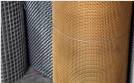
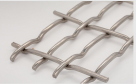
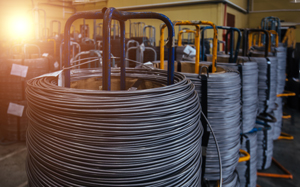

Stainless steel wire cloth grades are not interchangeable. Selecting the wrong grade costs more than the price difference between alloys — it costs downtime, failed inspections, and reorders. The grade of stainless steel determines corrosion resistance, temperature limits, weldability, and weaving behavior, and ultimately whether the cloth survives its operating environment or corrodes in service. Stainless steel wire cloth is woven from chromium-bearing steel alloys on industrial looms, producing precision metal fabric used in filtration, screening, and separation across aerospace, chemical processing, pharmaceutical, food production, and defense applications.
This guide covers the eight most commercially relevant grades, their compositions, mechanical properties, and a decision framework for matching grade to environment. Cleveland Wire Cloth & Manufacturing Company, an AS 9100D and ISO 9001 certified manufacturer weaving wire cloth since 1914, stocks 16 stainless steel grades in wire diameters from heavy structural to fine filtration and weaves each to ASTM E2016 and E2814 specifications. Engineers who need grade-specific data for an active specification can request a quote with application details for a recommendation from our engineering team.
What makes steel “stainless” and why it matters for wire cloth
Steel becomes stainless when its chromium content reaches 11% or higher. At that threshold, chromium reacts with oxygen to form a continuous chromium oxide (Cr2O3) layer across the metal surface. This layer is only a few atoms thick, but it is self-healing. If the surface is scratched or cut during weaving, the oxide reforms within hours in any oxygen-containing environment.
This self-healing property is what separates stainless steel wire cloth from carbon steel alternatives. Carbon steel wire will rust in ambient humidity. Stainless steel wire cloth maintains its opening geometry, tensile strength, and surface finish across years of service in corrosive environments.
Three alloy families dominate wire cloth applications:
- – Austenitic (300-series) contains chromium and nickel. Non-magnetic. Accounts for the majority of stainless steel wire cloth production. Grades 304, 316, 316L, 321, and 347 are all austenitic.
- – Ferritic (400-series) contains chromium without significant nickel. Magnetic. Lower cost than austenitic grades. Grade 430 is the primary ferritic wire cloth alloy.
- – Martensitic grades contain chromium with controlled carbon. Heat-treatable to high hardness. Grade 410 is used where abrasion resistance matters more than corrosion resistance.
A fourth family, duplex (austenitic-ferritic), combines properties of both. CWC stocks Duplex 2205 for applications requiring both high strength and chloride resistance, though it falls outside the scope of this guide.
The alloying elements added beyond chromium — nickel, molybdenum, titanium, niobium, carbon — define each grade’s performance envelope. Those differences determine which wire cloth grade belongs in your specification.
Grade 304: the general-purpose standard
Grade 304 is the most widely specified stainless steel wire cloth in production. Its composition of 18% chromium and 8% nickel (designated “18-8”) delivers corrosion resistance adequate for most industrial environments at a cost point that makes it the default choice when no specific environmental condition demands a premium alloy.
Composition: 18% Cr, 8% Ni, 0.08% max C
Temperature limits: 1,500F (815C) continuous service, 1,600F (870C) intermittent
Tensile strength: 520 MPa minimum (75 Kpsi) per ASTM A580, annealed condition
Density: 7.93 g/cm3
Grade 304 wire cloth handles general filtration, screening, food processing, and architectural applications. It resists oxidation and most organic and inorganic chemicals in moderate concentrations.
304 does not hold up in chloride environments. Exposure to chlorides (seawater, deicing salts, hydrochloric acid, bleach solutions) causes pitting corrosion, crevice corrosion, and stress corrosion cracking. If your application involves sustained or concentrated chloride exposure, specify 316 instead of 304.
For applications where 304’s corrosion resistance is sufficient, it delivers the best cost-to-performance ratio in the stainless wire cloth lineup. CWC’s 304 stainless steel wire cloth is available in mesh counts from fine filtration to coarse screening, in all standard weave patterns.
Grade 304L: low carbon for welded assemblies
Grade 304L is the low-carbon variant of 304, with carbon content held below 0.03% versus 304’s 0.08% maximum. The relationship between 304 and 304L mirrors the relationship between 316 and 316L: reduced carbon prevents carbide precipitation during welding.
Composition: 18% Cr, 8% Ni, 0.03% max C
Temperature limits: 1,500F (815C) continuous service, 1,600F (870C) intermittent
Tensile strength: 485 MPa minimum (70 Kpsi) per ASTM A580, annealed condition
Density: 7.93 g/cm3
Specify 304L when wire cloth will be welded or brazed into assemblies and the operating environment does not require the chloride resistance of 316/316L. In mild-corrosion environments where welded fabrication is required, 304L delivers the same intergranular corrosion protection as 316L at a lower alloy cost — the molybdenum premium is unnecessary when chlorides are absent.
304L’s mechanical properties are slightly lower than standard 304 at room temperature due to the reduced carbon content. For non-welded applications, standard 304 is the more economical choice.
CWC stocks 304L stainless steel wire cloth and can provide material test reports documenting carbon content for each production lot.
Grade 316: the corrosion-resistant workhorse
Grade 316 adds 2-3% molybdenum to the austenitic formula, and that single element changes the alloy’s corrosion profile substantially.
Composition: 16% Cr, 10% Ni, 2-3% Mo, 0.08% max C
Temperature limits: 1,600F (870C) continuous, 1,700F (927C) intermittent
Molybdenum is the differentiator. It provides resistance to pitting and crevice corrosion in chloride-containing environments where 304 fails. Marine environments, chemical processing with halide exposure, and pharmaceutical manufacturing with chlorinated cleaning agents all call for 316.
The cost delta between 304 and 316 wire cloth runs approximately 15%. That premium buys chloride resistance that prevents the failures 304 cannot withstand. For any application involving salt spray, brackish water, bleach, or hydrochloric acid, the 15% upfront cost is a fraction of the replacement cost if 304 corrodes in service.
Grade 316 is the standard specification for pharmaceutical wire cloth, marine filtration, and chemical processing screens. CWC weaves 316 stainless steel wire cloth in fine Dutch weave configurations for pharmaceutical applications and standard plain weave for general chemical processing.
Grade 316L: low carbon for welded fabrications
The “L” in 316L stands for low carbon: less than 0.03% versus the 0.08% maximum in standard 316. That difference matters in one specific context, which is welding.
When standard 316 is heated into the sensitization range (800-1,500F, per ASTM A262 / AWS welding guidelines) during welding or brazing, carbon atoms migrate to grain boundaries and combine with chromium to form chromium carbides. This process, called carbide precipitation, depletes chromium from the surrounding metal, creating a narrow zone with corrosion resistance far below the alloy’s specification. The result is intergranular corrosion along the weld zone.
316L’s low carbon content eliminates this mechanism. With less than 0.03% carbon available, carbide precipitation cannot occur at a rate that compromises the chromium oxide layer.
Specify 316L when:
- – Wire cloth will be welded or brazed into assemblies
- – The finished fabrication will be exposed to corrosive media
- – Operating temperatures cycle through the sensitization range (800-1,500F, per ASTM A262 / AWS welding guidelines)
- – Regulatory or quality requirements mandate weld-zone corrosion testing
316L’s mechanical properties are nearly identical to standard 316 at room temperature. There is no performance penalty for specifying the low-carbon variant in non-welded applications, just a slight cost increase. Many engineers default to 316L for all 316 applications as a precaution.
CWC manufactures 316L wire cloth and can provide material test reports documenting carbon content for each production lot.
Grade 321: titanium-stabilized for high temperature
Grade 321 was designed for sustained high-temperature service where carbide precipitation would compromise an unstabilized austenitic grade.
Titanium, added at a minimum of 5 times the carbon content, preferentially bonds with carbon before chromium can. This titanium stabilization locks up available carbon as titanium carbides, which are thermodynamically stable and do not deplete the chromium needed for corrosion resistance.
The practical difference between 321 and 316L: 316L prevents carbide precipitation by reducing carbon. 321 prevents it by neutralizing carbon with titanium. Both approaches work, but 321 is the better choice for continuous high-temperature exposure because titanium carbides remain stable at temperatures where even low-carbon grades begin to sensitize over extended periods.
Common applications for 321 wire cloth:
- – Heat exchangers
- – Exhaust systems and manifold screens
- – Furnace components and atmosphere control
- – Thermal cycling applications where crimp integrity must be maintained
321 maintains crimp integrity under repeated thermal cycling better than 304. This matters for wire cloth in heat exchanger applications where the mesh expands and contracts through temperature swings during each operating cycle.
CWC’s 321 stainless steel wire cloth is available for applications requiring titanium stabilization and sustained high-temperature performance.
Grade 347: columbium-stabilized for intergranular corrosion resistance
Grade 347 uses niobium (historically called columbium) plus tantalum as stabilizing elements instead of titanium. The stabilization mechanism is the same: preferential carbide formation that protects chromium. Niobium-tantalum stabilization, however, provides advantages at the highest temperature ranges.
347 offers superior mechanical properties at elevated temperatures compared to 316 and better high-temperature oxidation resistance. Where 316 reaches its service ceiling, 347 continues to perform with retained strength and corrosion resistance.
Common applications for 347 wire cloth:
- – Aerospace filtration and separation
- – Nuclear applications requiring intergranular corrosion resistance
- – High-temperature chemical processing above 316’s service limit
- – Applications requiring long-term stability at sustained temperatures
347 is more stable during welding than most austenitic grades due to niobium’s strong carbide-forming tendency. This makes it a preferred grade for welded wire cloth assemblies that will operate at elevated temperatures.
CWC stocks 347 stainless steel wire cloth and weaves it to AS 9100D quality standards for aerospace applications.
Grades 410 and 430: ferritic and martensitic options
Not every application needs an austenitic alloy. Grades 410 and 430 offer different cost and performance profiles.
Grade 430 (ferritic)
Composition: 17% Cr, <0.12% C, no significant nickel
430 is a ferritic stainless steel: magnetic, nickel-free, and considerably less expensive than 300-series grades. It provides moderate corrosion resistance adequate for indoor atmospheric exposure, mild chemical environments, and general screening.
430 wire cloth is a practical specification for:
- – General-purpose screening where atmospheric corrosion resistance is sufficient
- – Applications requiring a magnetic stainless grade
- – Budget-sensitive projects in coarse-mesh applications (typically wire diameters above 0.010 inches) where 304’s performance exceeds requirements. 430’s limited ductility restricts its weavability in fine mesh.
- – Decorative applications
Grade 410 (martensitic)
410 is a martensitic grade, heat-treatable to the highest hardness of any common stainless steel. After heat treatment, 410 provides abrasion resistance that austenitic and ferritic grades cannot match.
410 wire cloth serves applications where wear resistance is the primary specification driver: abrasive material screening, high-wear screening media, and applications where mesh life is limited by abrasion rather than corrosion.
Both ferritic and martensitic grades weave differently from austenitic grades on the loom. Their spring-back characteristics, crimp retention, and drawing behavior differ enough that loom setup and weaving parameters must be adjusted. The next section covers those differences.
How alloy choice affects weaving and wire cloth performance
Grade selection guides rarely discuss how different stainless steel alloys behave during the weaving process itself. CWC has woven all seven of these grades on production looms for decades. The differences are real and they affect the finished product.
Work hardening and alloy composition
316’s 2-3% molybdenum content increases flow stress during drawing and weaving, resulting in higher work-hardening rates on the loom compared to 304. Nickel content contributes to austenite stability but molybdenum is the primary factor in the work-hardening differential between 304 and 316. Every pass through the heddle frames and every beat of the reed cold-works the wire. 316 wire hardens faster than 304, which means the weaver encounters increasing resistance as the cloth is produced. At fine mesh counts, 316 wire cloth requires more precise tension control to maintain consistent opening size across the full width of the loom.
This is a manufacturing reality that affects production parameters, not a quality issue. CWC adjusts loom settings by grade to account for these differences.
Ferritic vs. austenitic spring-back
Ferritic grades (430, 410) exhibit different spring-back characteristics from austenitic grades (304, 316, 321, 347). When a wire is bent around an intersecting wire during weaving, it springs back toward its original shape once tension is released. Austenitic grades, with their face-centered cubic crystal structure, accept deformation more readily. Ferritic grades, with a body-centered cubic structure, spring back more aggressively.
This spring-back difference affects crimp geometry. Ferritic wire cloth requires different crimp dies and weaving parameters to achieve the same opening consistency that austenitic grades deliver with standard tooling.
Wire diameter tolerance variation
Wire diameter tolerances vary by grade because drawing characteristics differ between alloy families. Finer wire cloth specifications (wire diameters below 0.005″) amplify these tolerance differences. A tolerance variation that is negligible at 0.020″ wire diameter becomes a meaningful percentage of the wire cross-section at 0.003″. CWC verifies incoming wire diameter by lot and adjusts mesh count parameters to compensate when necessary.
Crimp retention differences
Austenitic grades retain crimp geometry more consistently than ferritic grades across temperature variations. For wire cloth that will operate in thermal cycling environments, this matters. 321 and 347 stabilized grades maintain crimp integrity at elevated temperatures better than unstabilized 304 because their microstructures remain stable through the temperature ranges that cause carbide precipitation and grain growth in standard grades.
Carbon content also affects crimp retention after heat cycling. Lower-carbon grades (304L, 316L) experience less microstructural change during thermal exposure, which preserves the as-woven crimp profile.
Post-weaving processing by grade
After weaving, wire cloth often requires processing before it meets the final specification. These processes differ by grade:
- – Annealing eliminates cold work from drawing and weaving. Austenitic grades are typically annealed in hydrogen or argon atmospheres. Ferritic grades require different temperature profiles and hold times. Solution annealing (heating to dissolve precipitated carbides followed by rapid cooling) applies to grades that have been exposed to sensitization temperatures.
- – Passivation in nitric acid or citric acid solutions dissolves free iron and nickel from the surface after annealing or fabrication, leaving a chromium-enriched oxide layer. 316 forms a more corrosion-resistant passive layer than 304 due to its molybdenum content. The passivation response varies measurably between grades.
- – Cleaning protocols differ by grade because surface chemistry differs by composition. Food-grade wire cloth requires different cleaning and surface preparation than industrial-grade product. Pharmaceutical applications require documented cleaning validation.
This manufacturing knowledge — how each grade behaves on the loom and through post-weaving processing — is why specification engineers work with manufacturers, not distributors, when grade selection matters.
Matching grade to environment: a decision framework
Chemical composition comparison
| Grade | Cr (%) | Ni (%) | Mo (%) | C (% max) | Other | Max Temp (F) (continuous / intermittent) |
|---|---|---|---|---|---|---|
| 304 | 18 | 8 | — | 0.08 | — | 1,500 / 1,600 |
| 304L | 18 | 8 | — | 0.03 | — | 1,500 / 1,600 |
| 316 | 16 | 10 | 2-3 | 0.08 | — | 1,600 / 1,700 |
| 316L | 16 | 10 | 2-3 | 0.03 | — | 1,600 / 1,700 |
| 321 | 17 | 9 | — | 0.08 | Ti: 5x C min | 1,500 / 1,600 |
| 347 | 17 | 9 | — | 0.08 | Nb+Ta: 10x C min | 1,500 / 1,650 |
| 410 | 12 | — | — | 0.15 | Heat-treatable | 1,200 / — |
| 430 | 17 | — | — | 0.12 | Magnetic | 1,500 / 1,600 |
Mechanical properties (annealed condition)*
| Property | 304 | 304L | 316 | 316L | 321 | 347 | 430 | 410 |
|---|---|---|---|---|---|---|---|---|
| Tensile Strength (MPa) | 520 min | 485 min | 515 min | 485 min | 515 min | 515 min | 450 min | 450 min |
| Tensile Strength (Kpsi) | 75 | 70 | 75 | 70 | 75 | 75 | 65 | 65 |
| Yield Strength (MPa) | 205 | 170 | 205 | 170 | 205 | 205 | 205 | 205 |
| Elongation (%) | 40 | 40 | 40 | 40 | 40 | 40 | 22 | 20 |
| Density (g/cm3) | 7.93 | 7.93 | 7.98 | 7.98 | 7.92 | 7.96 | 7.70 | 7.80 |
| Melting Point (C) | 1,398-1,420 | 1,398-1,420 | 1,370-1,400 | 1,370-1,400 | 1,398-1,420 | 1,398-1,420 | 1,425-1,510 | 1,480-1,530 |
Values are minimums per ASTM A580-23 for stainless steel wire. Actual values may be higher due to cold work from drawing.
Grade-to-environment decision matrix
| Environment | Recommended Grade | Rationale |
|---|---|---|
| General indoor screening / dry atmosphere | 430 | Adequate corrosion resistance at lowest cost |
| Food processing, general filtration | 304 | FDA-acceptable, corrosion-resistant in organic acids and mild chemicals |
| Welded assemblies in mild environments | 304L | Low carbon prevents sensitization; sufficient when chloride resistance is not required |
| Marine / saltwater exposure | 316 | Molybdenum resists chloride pitting and crevice corrosion |
| Pharmaceutical / chlorinated cleaning | 316L | Low carbon prevents sensitization; chloride resistance from molybdenum |
| Welded assemblies in corrosive service | 316L | Low carbon eliminates intergranular corrosion risk at weld zones |
| Sustained high temperature (above 800F) | 321 | Titanium stabilization prevents carbide precipitation during thermal cycling |
| Aerospace / nuclear / extreme high temp | 347 | Niobium stabilization with superior elevated-temperature mechanical properties |
| Abrasive material screening | 410 | Martensitic; heat-treatable to highest hardness for wear resistance |
| Budget-sensitive, moderate exposure | 304 | Best cost-to-performance ratio for standard industrial environments |
| Severe acid / aggressive chemical | 317 or AL-6XN | Higher Mo content; contact CWC engineering for recommendation |
Decision paths
If temperature is the primary concern, most grades perform adequately under 800F, so select by corrosion requirement. Above 800F continuous, specify 321 or 347 for stabilization. Above 1,700F, contact CWC for high-temperature alloys (309, 310, 330).
If corrosion resistance drives the decision, a dry environment calls for 430 or 304. Mild corrosion calls for 304 or 304L (304L when the wire cloth will be welded). Chloride exposure calls for 316 or 316L. Severe acid or mixed-acid environments require specialty grades like 317, AL-6XN, or Duplex 2205.
If cost is the primary driver, the general price ranking is 430 < 304 < 316 < 321/347. The ~15% premium between 304 and 316 is the most common decision point. If chloride exposure exists at any level, the premium pays for itself by preventing premature failure.
Certification, compliance, and traceability
Grade selection is half the specification. The other half is confirming that the manufacturer can document what they delivered.
ASTM E2016 governs industrial woven wire cloth specifications: wire tolerances, cloth tolerances, blemishes, and delivery requirements. ASTM E2814 adds specific requirements for Dutch weave wire cloth used in fine filtration.
ASTM A580-23 covers the stainless steel wire itself, the raw material before it reaches the loom. This is the standard CWC typically certifies to for wire products. It specifies chemical composition, mechanical properties, and testing requirements by grade. The mechanical properties in this guide are referenced from ASTM A580-23.
ISO 9001 is the foundational quality management standard. Some customers require their suppliers to maintain ISO 9001 certification independently, even when AS 9100D (which incorporates ISO 9001) is also held. CWC maintains both certifications.
AS 9100D is the aerospace quality management standard. Wire cloth specified for aerospace applications (fuel filtration, hydraulic filtration, engine components) requires a manufacturer certified to AS 9100D. CWC holds this certification. Some aerospace drawings reference AMS wire specifications (such as AMS 5510 or AMS 5639) rather than ASTM A580. CWC can supply wire cloth to AMS specifications when required by the procurement drawing.
DFARS (Defense Federal Acquisition Regulation Supplement) compliance — specifically clauses 252.225-7009 and 252.225-7014 — covers the melt and manufacture of specialty metals for defense procurement. DFARS requirements extend to qualifying countries, not exclusively the United States, as some alloys cannot be obtained from a domestic melt source. Wire cloth in defense applications must come from DFARS-compliant manufacturers with compliant melt certification and full lot traceability. CWC is DFARS compliant and provides melt documentation meeting the applicable clause requirements.
Material test reports (MTRs) document the chemical composition, mechanical properties, and heat lot of every wire used in production. Traceability from finished wire cloth back to the original wire heat lot is a standard CWC practice.
CWC stocks 16 stainless steel grades in inventory: austenitic (304, 304L, 309, 310, 314, 316, 316L, 317, 321, 330, 347, 17-7 PH, AL-6XN), ferritic (410, 430), and duplex (2205). That alloy inventory covers most specifications without requiring special-order wire, which shortens lead times.
FAQ: stainless steel wire cloth grades
The primary difference is molybdenum. Grade 316 contains 2-3% molybdenum, which provides resistance to pitting and crevice corrosion in chloride environments. Grade 304 does not contain molybdenum and is susceptible to chloride attack. 316 costs approximately 15% more than 304. Specify 316 when chlorides, marine exposure, or pharmaceutical cleaning agents are present.
304 handles most general filtration. For pharmaceutical, chemical, or marine filtration involving chlorides or aggressive media, 316 or 316L is the standard specification. Dutch weave wire cloth for fine filtration (down to 5 microns) is commonly woven from 316L to preserve weld-zone integrity when the cloth is fabricated into filter assemblies.
Stainless steel resists rusting but is not immune. Surface contamination from carbon steel tools, iron-bearing dust, or improper cleaning can cause surface rust (tea staining) even on 316. True corrosion occurs when the grade’s resistance is exceeded by the environment — 304 in chloride service, for example. Proper grade selection for the operating environment prevents corrosion failure.
Specify 316L when the wire cloth will be welded, brazed, or exposed to temperatures in the sensitization range (800-1,500F, per ASTM A262 / AWS welding guidelines). The low carbon content (less than 0.03%) prevents carbide precipitation and intergranular corrosion at weld zones. If the wire cloth will not be welded and will operate below 800F, standard 316 performs identically at slightly lower cost.
ASTM E2016 is the primary specification for industrial woven wire cloth, covering wire tolerances, cloth tolerances, and delivery requirements. ASTM E2814 covers Dutch weave wire cloth in particular. ASTM A580 governs the stainless steel wire used as the raw material. CWC manufactures to all three standards.
Yes. Grade 304 is the standard alloy for food processing wire cloth and complies with FDA requirements for food-contact surfaces. It resists corrosion from most food acids (citric, acetic, lactic) and withstands standard cleaning protocols. If chlorinated sanitizers (bleach-based) are used frequently, specify 316 instead.
Grade 304 is rated for 1,500F (815C) continuous service and 1,600F (870C) intermittent service. Above 800F, 304 becomes susceptible to carbide precipitation (sensitization) during prolonged exposure. For sustained service above 800F, specify 321 (titanium-stabilized) or 347 (niobium-stabilized) to prevent intergranular corrosion.
DFARS (Defense Federal Acquisition Regulation Supplement) — primarily clauses 252.225-7009 and 252.225-7014 — requires that specialty metals used in defense applications, including stainless steel wire cloth, are melted and manufactured in qualifying countries. DFARS compliance includes compliant melt certification and full lot traceability from raw wire to finished cloth. CWC is DFARS compliant and provides the documentation required for defense procurement.
Picking the right grade
The right stainless steel grade for wire cloth depends on the corrosive environment, the operating temperature, and the fabrication method. Grade 304 is the starting point. Chlorides push the specification to 316 or 316L. Sustained high temperatures demand 321 or 347. Cost-driven coarse-mesh applications (typically wire diameters above 0.010 inches) where corrosion resistance can be reduced point to 430; its limited ductility restricts weavability in fine mesh.
Cleveland Wire Cloth stocks 16 stainless steel grades and has been weaving them on production looms since 1914. Our engineering team matches grade to application based on decades of manufacturing experience with every alloy in inventory.
Request a quote with your application details, and we will recommend the right grade for your specification.