

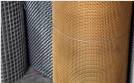
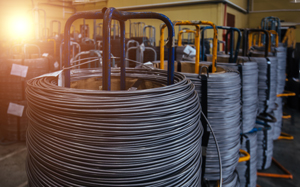

Wire cloth and woven wire mesh are the same product, made on the same looms using the same process. The only difference is what buyers in different industries call it.
Quick Answer
Both terms refer to woven metal fabric made by weaving metal wires together on a weaving loom in over-and-under patterns that create uniform openings. “Wire cloth” is the formal name used by ASTM E2016 and shows up most in filtration and precision work. “Woven wire mesh” is the more common commercial term, especially in screening, mining, and architecture. No standard or industry body has ever drawn a line between them.
Same Product, Same Process
On the production floor, there is no difference. A weaver does not change anything about the loom or the process based on which name someone uses.
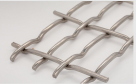
Warp wires run lengthwise through the loom under tension. Shute wires (also called weft or fill) cross the warp in alternating over-and-under passes. Crimps at each intersection lock the weave in place, and each shute wire gets compacted against the previous one to hit the target mesh count.
What actually determines the finished product is mesh count, wire diameter, weave pattern, crimp style, and alloy. None of that changes because someone called it “cloth” instead of “mesh.”
ASTM E2016, titled Standard Specification for Industrial Woven Wire Cloth, covers woven wire products broadly and does not create separate categories for cloth versus mesh. The ASTM store listing says the standard applies to products “also known as, wire mesh.”
Why the Industry Uses Different Terms
The split is not technical. It comes down to trade convention and who is buying.
Wire Cloth: The Filtration and Precision End
“Wire cloth” is the term you hear when precision particle separation is the goal. Pharmaceutical screening specs use it. Laboratory sieve standards (ASTM E11) use it. Aerospace fuel filter requirements reference it alongside ASTM E2016 and RR-W-360 — the weaving specs that aerospace and defense buyers most commonly see on drawings and spec sheets. Fine wire cloth has a flexible, fabric-like drape, which is where “cloth” comes from in the first place.
Where you see “wire cloth” most:
• Pharmaceutical and chemical process filtration
• Laboratory test sieves
• Aerospace fuel and hydraulic filtration
• Food and beverage processing screens
• Oil and gas sand control
Dutch weave wire cloth is the finest end of the range and has its own standard (ASTM E2814). It packs shute wires tightly against each other so there are no straight-through openings. Fluid has to travel a non-linear (tortuous) path through the cloth body. That is how Dutch weave filter cloth retains particles down to 5 microns — much smaller than you would expect from the nominal opening size alone.
Woven Wire Mesh: The Screening and Structural End
“Woven wire mesh” usually means heavier products with larger openings and thicker wire. Mining engineers, aggregate producers, and architects all default to this term.
Where you see “woven wire mesh” most:
• Vibrating screen decks for mining and aggregate processing
• Architectural facades, partitions, and balustrades
• Security and protective guarding
• Industrial separation and sizing
• Animal enclosures and agricultural screens
In mining and aggregate, screen media are specified by opening size in inches or millimeters rather than mesh count. Crimp style becomes the important variable. Lock crimp, flat top, and intermediate crimp weaves each handle different screening conditions and affect screen life, blinding resistance, and product accuracy.
Wire Mesh Screen: A Third Term
“Wire mesh screen” is woven wire media installed in a vibrating screen deck. Same product as woven wire mesh — the term just tells you it is being used as replaceable screening media inside a machine, not sold as a standalone panel or roll.
The Product Spectrum
Wire cloth and woven wire mesh are not two categories. They are points along a single manufacturing continuum, all produced on the same types of looms and governed by the same ASTM standard.
| Characteristics | Fine end (“wire cloth”) | Coarse end (‘woven wire mesh) |
|---|---|---|
Typical openings | Measured in microns or mesh count | Measured in inches or millimeters |
Wire diameter | Finer (down to .001″) | Heavier (up to 1″ and beyond) |
Common weave patterns | Dutch weave, plain square, twill | Lock crimp, flat top, double crimp, plain square |
Primary applications | Filtration, separation, pharmaceutical, aerospace | Screening, mining, architecture, guarding |
How it is specified | Mesh count, wire diameter, micron rating | Opening size, wire diameter, crimp style |
Physical character | Flexible, fabric-like | Rigid, grid-like |
Standard | ASTM E2016 (general), ASTM E2814 (Dutch weave) | ASTM E2016 |
The overlap in the middle is bigger than most people expect. Products with wire diameters between .020″ and .080″ get called either term depending on the buyer’s industry.
When Terminology Affects Procurement
If your engineering team says wire cloth and woven wire mesh are the same product, they are right. The names live in procurement language, not on the production floor. But using the term your supplier expects does matter when you are getting quotes.
Filtration Applications
Ask for “wire cloth” when you need precision filtration media, especially Dutch weave configurations with controlled micron ratings. This applies to pharmaceutical sifting, chemical processing, food production, and aerospace fuel filtration. If you ask a screening-focused supplier for “woven wire mesh” when you actually need 10-micron Dutch weave filter cloth, you will probably get quoted on the wrong product.
Screening and Separation
For aggregate sizing, mining screens, and bulk material separation, “woven wire mesh” or “wire mesh screen” is the language that gets you to the right product. These are specified by opening size, not mesh count, and crimp style is a variable that filtration-focused suppliers may not stock. Lock crimp, flat top, and intermediate crimp weaves come from the screening side of the industry.
Aerospace and Regulated Industries
Aerospace and defense buyers reference “wire cloth” alongside ASTM E2016 and RR-W-360 — the weaving specifications most commonly cited on aerospace and defense drawings and spec sheets. RR-W-360 is the previous weaving spec and is now obsolete, but a large number of older drawings still reference it and it remains relevant for buyers searching for certified suppliers. DFARS compliance and AS 9100D certification handle traceability and domestic sourcing of specialty metals.
Architecture and Design
Architects who specify woven wire mesh for facades, balustrades, partitions, and ceilings usually care about percent open area as much as structural performance. Flat top weave and rectangular off-count patterns are common in this market.
Specification Checklist
Whatever you call the product, your supplier needs these details to quote it:
• Opening size or mesh count (e.g., 100 mesh, 0.5″ opening, or 25 microns)
• Wire diameter (e.g., .016″)
• Weave pattern (plain square, twill, Dutch, flat top, lock crimp, etc.)
• Crimp style for coarser products (double crimp, lock crimp, intermediate crimp, flat top)
• Material and alloy (316L stainless, Inconel 625, titanium Grade 2, etc.)
• Dimensions (roll width up to 8 feet; specify footage or sheet size)
• Quantity
• Application or end use (so the manufacturer can recommend the right weave and alloy)
• Applicable standards (ASTM E2016, ASTM E2814, ASTM E11, RR-W-360, AS 9100D, DFARS, FDA)
Our specification tables and calculators list standard mesh counts, open area percentages, and wire diameters.
Cleveland Wire Cloth
Cleveland Wire Cloth has been weaving wire since 1914 and is a founding member of the American Wire Cloth Institute (AWCI, est. 1933).
We make everything from fine Dutch weave filter cloth rated to 5 microns up to coarse woven wire mesh with 6-inch openings, in roll widths to 8 feet. Materials include stainless steel, titanium, Inconel and Hastelloy, and many other alloys. We hold AS 9100D and DFARS compliance for aerospace and defense, plus ISO 9001:2015 for quality management.
Wire cloth, woven wire mesh, wire mesh screen — we make all of it on the same production floor we have operated since 1914. Tell us what you need, not what to call it. Request a quote and we will get the right product specified.
Frequently Asked Questions
Are wire cloth and woven wire mesh the same product?
They are. Both are woven on industrial weaving looms using the same process. ASTM E2016 covers both under “industrial woven wire cloth” and notes the product is also known as wire mesh. Different industries picked different names for the same thing.
Is there a mesh count that separates wire cloth from woven wire mesh?
No one has ever defined one. Finer products are generally called wire cloth, coarser products are generally called woven wire mesh, but no standard or trade group has drawn an official line.
Which term should I use when ordering?
Whichever your industry uses. What matters on the quote is the spec: mesh count or opening size, wire diameter, weave pattern, material, and applicable standards.
What is Dutch weave, and why does it matter for filtration?
Dutch weave packs smaller-diameter shute wires tightly between larger-diameter warp wires so there are no straight-through openings. Fluid has to travel a tortuous path through the cloth body, which is how standard commercial Dutch weave retains particles down to 5 microns. It has its own ASTM standard (E2814), separate from the general wire cloth standard (E2016).
What is the difference between woven wire mesh and welded wire mesh?
This is an actual manufacturing difference. Woven wire mesh is made by interlacing wires on a loom. Welded wire mesh is made by resistance-welding wires at each intersection. Different structural properties, different flexibility, different uses. You cannot substitute one for the other.