Precision aerospace wire cloth for fuel filtration, EMI/RFI shielding, sound attenuation, and wind tunnel flow screens. AS 9100D and DFARS certified.
Wire cloth for catalyst support, separator screens, mud screens, fuel cells, and turbine components. Corrosion-resistant alloys including Hastelloy and Inconel.
Custom weaving to ASTM E2016.
Wire cloth for data center and mission-critical facilities — basket and Y-strainer elements, cooling tower intake and basin screens, economizer and air intake screens, and generator exhaust spark arrestors. 304 and 316 stainless steel. Custom fabrication to OEM dimensions.
Wire cloth for power generation and battery energy storage — crimped multi-layer spark arrestor mesh, exhaust and ventilation screens, and nickel electrode mesh for alkaline electrolyzers. Stainless steel, Inconel, and nickel for high-temperature and corrosive service.
EMI and RFI shielding wire mesh for electronics enclosures, microphone and speaker grilles, ventilation fan screens, and glare control panels. Custom mesh counts available.
Pharmaceutical wire mesh for process screens, centrifuge screens, test sieves, sterilization baskets, and surgical prosthesis reinforcement.
316L stainless steel, FDA-compatible.
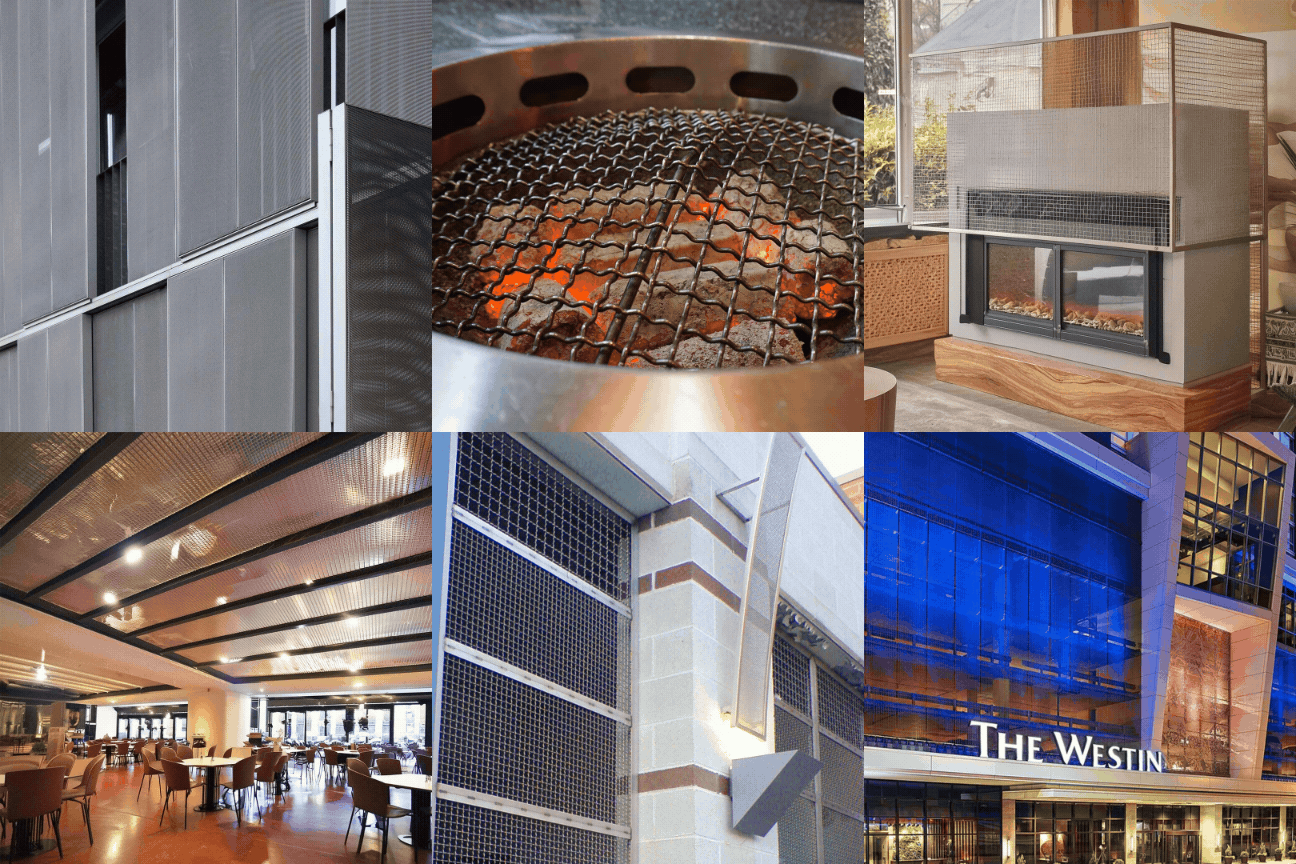
Architectural wire mesh for facade panels, ceiling systems, handrails, partitions, balustrades, and security applications.
Flat top and plain square weave in stainless steel.
Wire cloth for consumer product OEM applications — filter and vent screens, heater guards, infrared screens for appliances, fireplace screens, and fan grilles. Any quantity.
Wire cloth for environmental applications — air and water filtration, dewatering screens, solids and liquid separation, waste treatment, groundwater monitoring, and sound control.
Food grade wire mesh for sifting, sizing, filtration, and separation.
Process screens for food manufacturing and crop handling.
304 and 316L stainless steel, FDA-compatible.
Wire cloth for shipbuilding — filters, strainers, EMI/RFI shielding, ventilation screens, and safety guards.
Corrosion-resistant stainless steel and specialty alloys for marine environments.
Wire cloth for transportation OEM applications — air, oil, fuel, and hydraulic filtration; grilles and trim components; fuel cells.
Stainless steel and specialty alloys for automotive, rail, and aerospace use.
DFARS-compliant wire cloth for defense applications — combat vehicles, naval vessels, UAVs, missiles, armor systems, and containment. AS 9100D certified. Fully traceable materials.
Mining screen mesh and wire cloth for aggregate screening, ore sizing, and mineral separation. Heavy-gauge carbon steel, galvanized, and stainless steel.
Custom dimensions available.
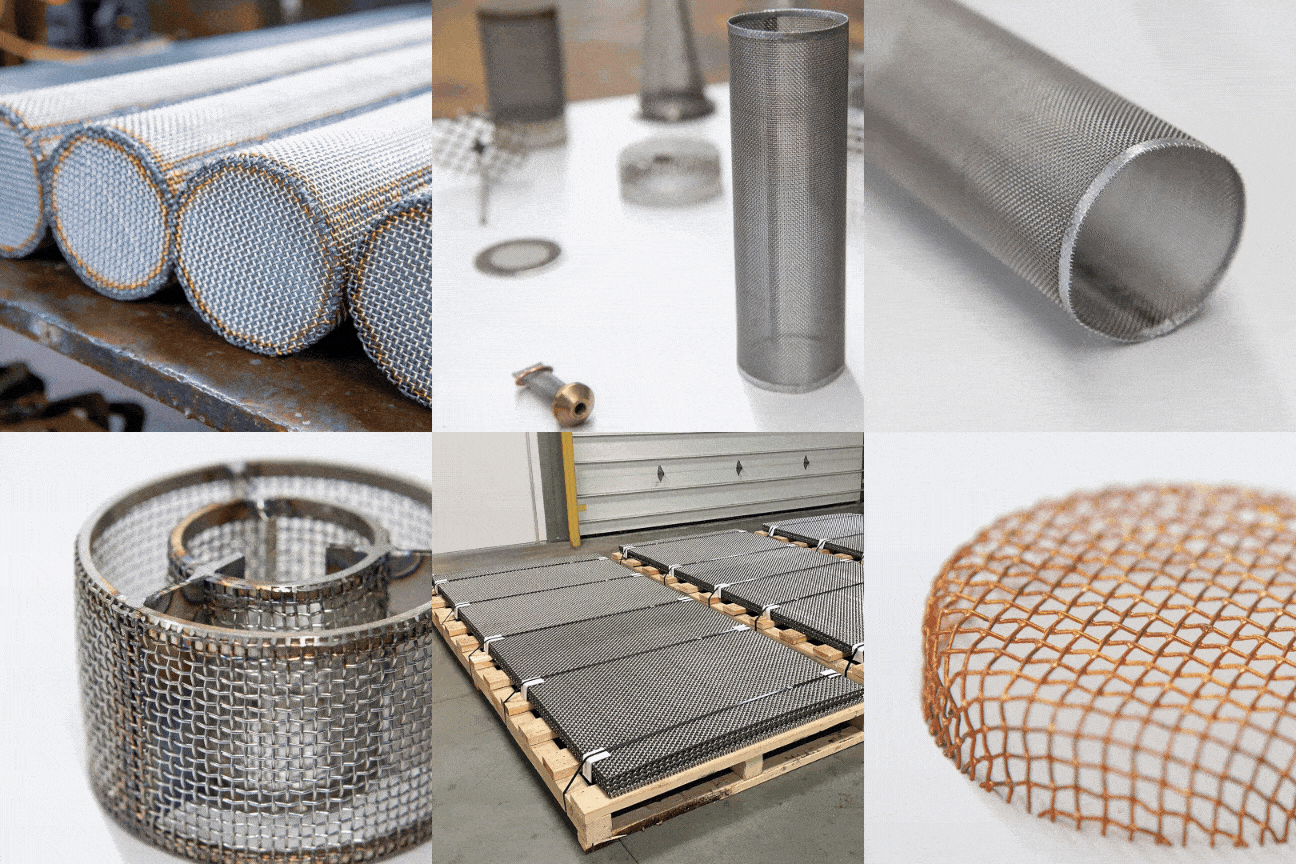
Wire cloth weaves and fabricates industrial wire mesh baskets in a wide variety of styles, materials, frames, and lifting devices. Thousands are in use throughout the industry. Each is custom-built to meet your specific requirements for:
Bales, handles or hooks may be attached to the basket so they are: stationary, droppable, or swiveling in operation.
Basket styles fabricated by Cleveland Wirecloth include:
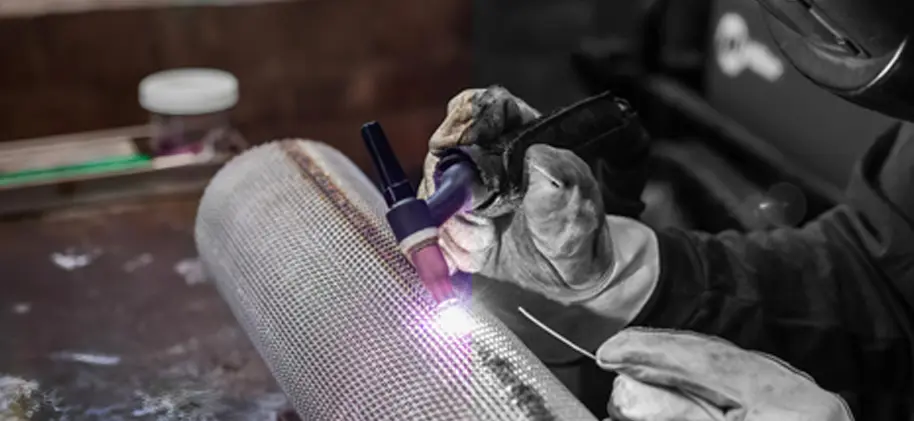
Certain baskets may be formed from woven wire cloth with no special hardware. However, where frames are required, round or rectangular, they may be constructed from rod, flat, or angle stock. Basket tops may be equipped with smooth finish “U” bindings. Built-in accessories may include legs, lids, shelves, dividers, compartments, and sections. Baskets for small parts may be furnished with a small opening screen inner liner, with outer protection of heavy screen for strength. Assembly may be by welding or through fusion by spot, gas, or electric arc. Special cases may require clinched wire around the rod, riveting of screen to the frame, or soldering and brazing. After fabrication, woven wire baskets may be protected with additional coatings (e.g. zinc, tin, rubber, enamel or other suitable coatings).
Fabricated wire mesh is often used for burners and heater elements; flame guards and spark arrestors; vent screens; machinery and equipment safety guards and cages; screen sections for sizing and sifting equipment; shielding and sound control components.
The most important part of the strainer or filter is the screen, which guards an orifice or protects moving parts. One particle of scale, dirt, or other entrainment can cause serious damage to highly engineered, expensive equipment. To prevent equipment damage and protect against contamination, strainer screens must be designed of durable, corrosion-resistant materials with the specific application in mind. Cleveland Wirecloth individualizes strainers to customers’ design or we design a strainer to fit specific requirements. Our modern production facilities include electronic welding, soldering, stamping, rolling, folding, seaming, brazing, with particular attention being given to the finish desired.
Woven wire is the most popular material used in the manufacture of modern strainer screens. This is partly due to its inherent characteristics — high percentage of open area and roundness — which favor high flow and are ideal for flow patterns. Other reasons for woven wire popularity include its high strength and its ability to withstand extreme temperature variations, corrosive environments and vibration.
Woven screens find their greatest use in low and medium-pressure applications and typically range from 60-400 mesh. In high-pressure service, the fine mesh screen may be supported by a coarse backing screen. Plain weave screens ranging from .0008″ openings upward represent the bulk of strainer applications. For high pressures or heavy loads, twilled weaves are recommended.
Wire mesh for this application offers superior shielding to radio frequency interaction (RFI) and electromagnetic interference (EMI) when blocking incoming or outgoing energy is necessary to optimize functioning capabilities.
Wire cloth mesh screens are ideal guards and protective screens for equipment and machinery. Mesh guards offer great protection while allowing high visibility to moving parts of the machine.
Whether seen or unseen, wire cloth plays a vital role in functionality in numerous OEM applications.
While welded wire mesh is more commonly used for concrete reinforcement, woven wire cloth mesh is used to reinforce various other materials, such as the structure and support of medical implants. Titanium wire cloth is often used in these medical applications, as well as stainless steel for procedures such as hip replacements. The wire cloth mesh is often laminated between synthetics to create a more rigid structure for a variety of applications
Maximum vibrating screen production and efficiency is a result of many important factors. Some of these include selection of the vibrator; length and stroke of the unit; feed rate and method of feed; direction of rotation of circular action; and finally, the selection of screening media with the proper “hook” or screen edge preparation. Preformed metal hooks are engineered and designed for the grade of screen used to provide a means of applying tension until the surface is “taut.” A “taut” screening surface is essential for successful vibration performance.
Architectural mesh excels in enhancing acoustics by deflecting and diffusing sound throughout any space. Wire mesh acoustic panels or drapes are suitable for both ceilings and walls, optimizing sound quality effectively. Ideal for environments from performing arts centers to office spaces.
Architectural mesh, particularly fine mesh, boasts exceptional flexibility, enabling it to be molded, bent, and twisted to fit various free-from structures. Its versatility allows for the creation of distinctive art installations and unique sculptural pieces.
Elevate your interiors with custom decorative wire mesh, an ageless solution that draws attention and enhances visual appeal in both residential and hospitality settings. From custom furniture to kitchen cabinets to fireplaces and bar carts, our wire cloth adds a unique, textured aesthetic combining functionality with exquisite design.
Architectural mesh transforms ceiling spaces by beautifully diffusing and boosting light and provides architects with boundless design opportunities. Exterior wire mesh canopies and facades offer climate control superior climate control shading areas from the summer heat while retaining warmth during colder months, all without sacrificing the views due to the wire cloth’s transparent nature. Crafted for elegance and efficiency, it’s an exemplary choice for any design vision.
Wire mesh fencing and enclosures offer a versatile security and aesthetic appeal, suitable for both interior and exterior spaces, adapting effortlessly from ornate to practical. Durable and customizable, our wire mesh solutions blend seamlessly with a variety of styles and environments.
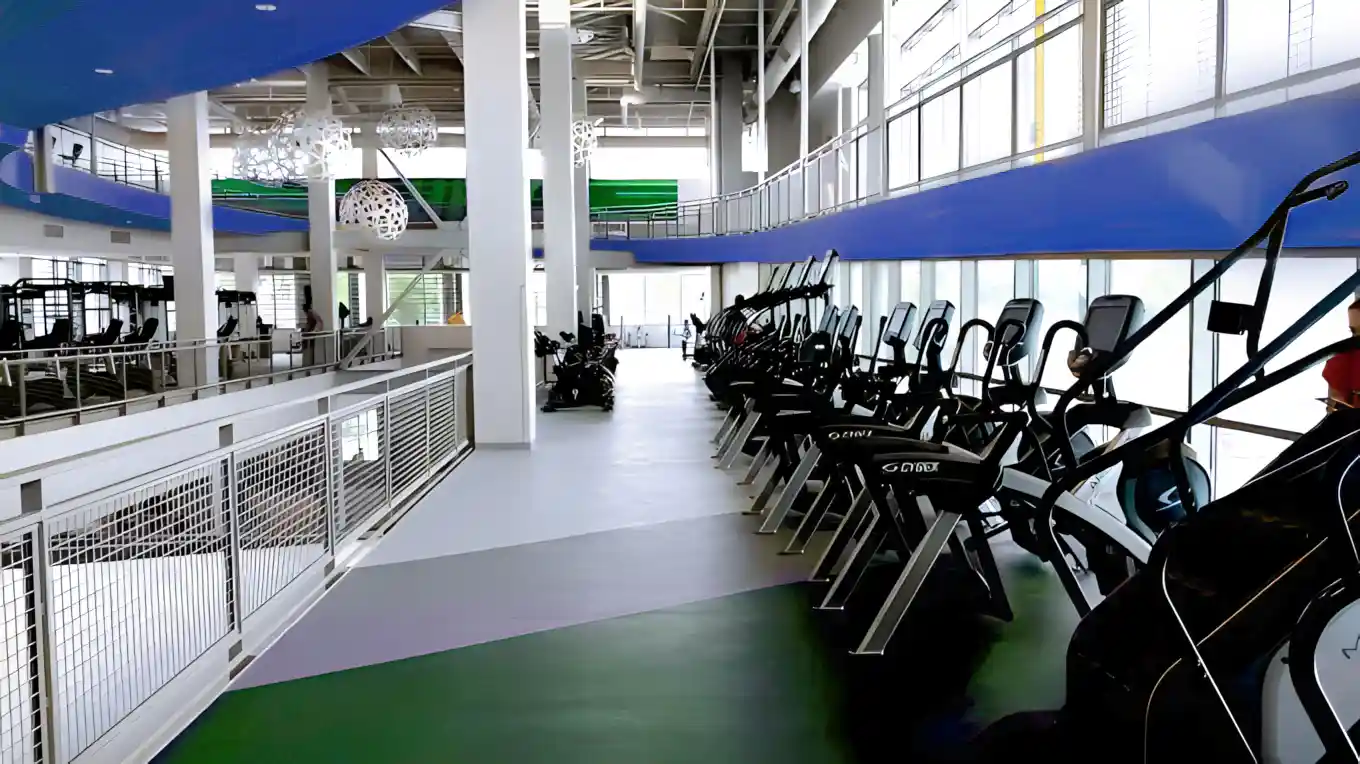
Wire cloth infill panels are often found lining stairwells, encircling balconies, edging pathways, bordering bridges, and surrounding patios. Whether on stairs, balconies, or walkways, wire cloth-infused railings play a critical role in defining and securing these spaces while adding a unique aesthetic touch.