

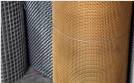
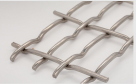
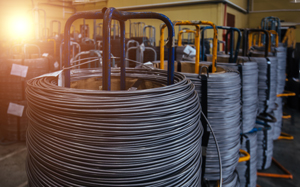

Wire sizes and openings range widely, due to such variety Cleveland Wirecloth offers many different weaves. Weave styles are often dictated by the mesh count and wire diameter specifications being used for the product. Below are descriptions of some common styles we weave at Cleveland Wirecloth.
Archives: Products
Create and manage product listings seamlessly on your website, tailored for e-commerce needs
The crimp provides strength and rigidity to the wire cloth by allowing wires to sit securely with each other, restricting their random movement, and ensuring consistent opening size. Crimp styles are often dictated by the mesh count and wire diameter specifications being used for the product. Below are descriptions of some common styles we weave here at Cleveland Wire Cloth.
Most common type. Used where the opening is relatively small in comparison to the wire diameter.
Used in coarse weaves of lighter-gauge wire to provide greater stability, tightness of weave and maximum rigidity. Very common in mesh openings larger than 1/2″ (12.7 mm).
Usually starts at 5/8″ (15.875 mm) opening and larger. Provides long abrasive resistant life, since there are no projections on top to wear. Offers least resistance to flow. Also very popular in certain architectural and structural applications where a smooth surface on one side is desirable.
The most common weave, with the same diameter warp and shute wires woven in a simple over and under pattern. It produces screens with the same mesh count in both directions.
Used only in coarse specifications to maintain the accuracy of weave throughout screen life, where the opening is large with respect to wire diameter.
Each shute wire typically passes over two warp wires and under two, producing square openings. Twill weave can be made from larger-diameter wires than would be possible in plain square weave to obtain greater strength, density, or corrosion resistance.
A Plain Weave wire cloth, woven in an over and under pattern with a different number of wires in the warp and shute direction, which yields a rectangular opening wire cloth. Rectangular openings are often used in sifting and sizing operations to increase product “through” capacity with minor sacrifices in accuracy. To reduce material costs, off-count mesh may be substituted for square mesh in some applications that do not require a high level of accuracy.
The same weave as Plain Dutch except the warp and shute wires are reversed; i.e., the warp wires have a smaller diameter than the shute wires. The larger shute wires are woven closer together than would usually be seen in a Plain Dutch Weave.